 English
 Español
 Pусский
 Français

ما الذي تبحث عنه؟

1: غطاء ألومنيوم مصبوب ADC12، تبديد حرارة فعال، توفير عالي للطاقة
2: مكونات ختم LED، IP66 مقاوم للماء، مقاوم للغبار، مقاوم للانفجار.
3: مادة المظهر رمادية/أصفر.
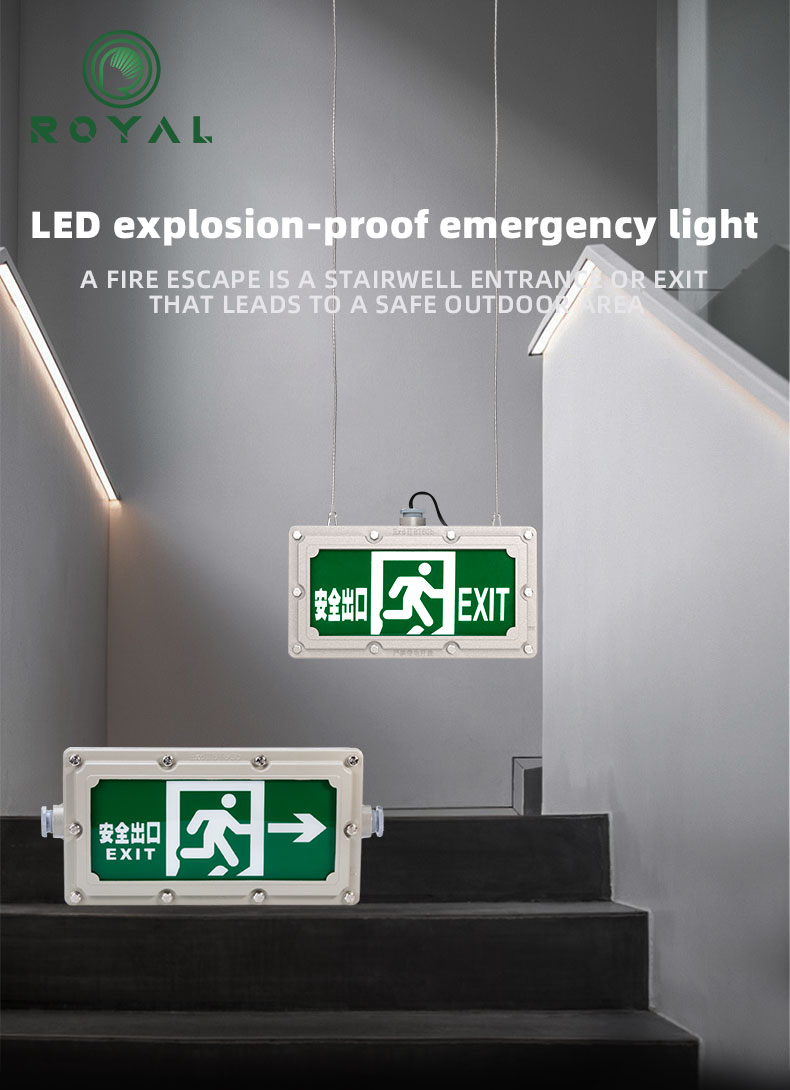
4: تتوفر مجموعة متنوعة من الأنماط، مثل نمط السلسلة المعلقة، ونمط الرأس الواحد، ونمط الرأس المزدوج، وما إلى ذلك.
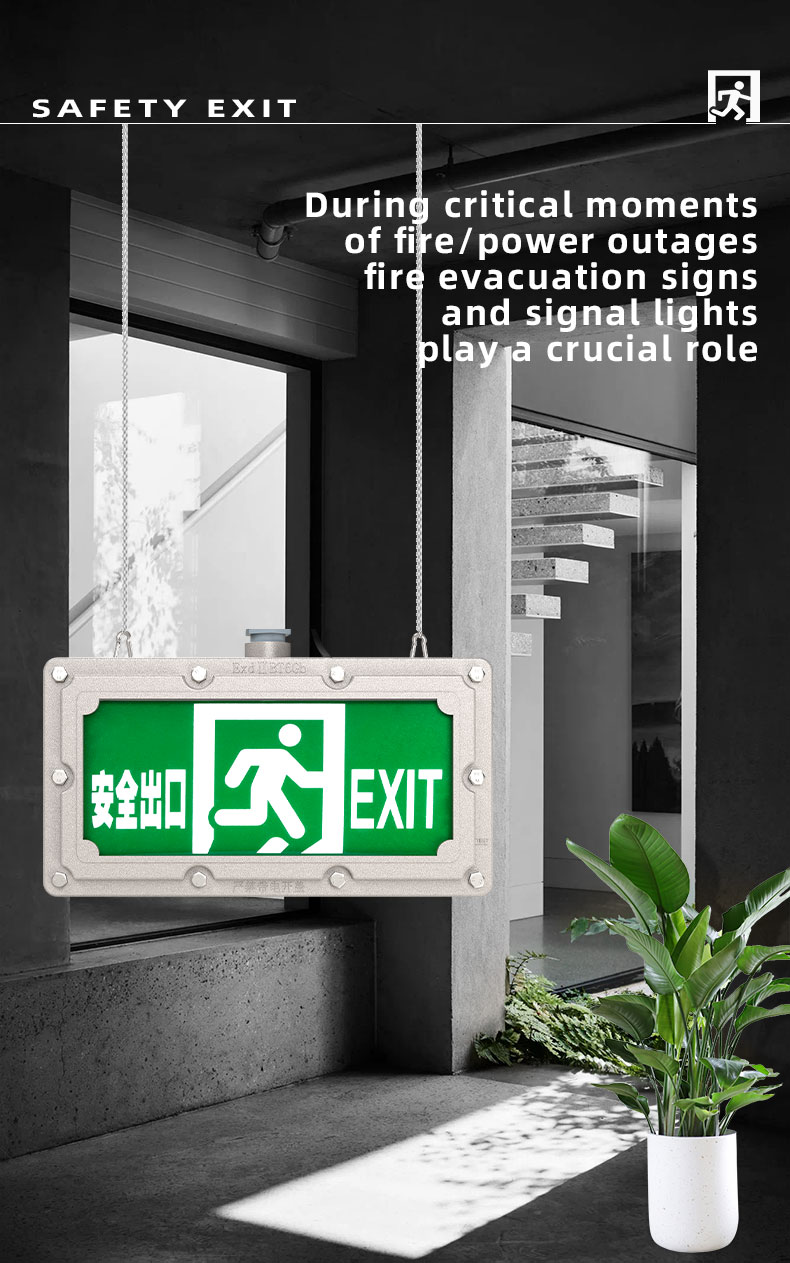
5. خلال اللحظات الحرجة من انقطاع التيار الكهربائي/الحريق، تلعب علامات الإخلاء وأضواء الإشارة دورًا حاسمًا
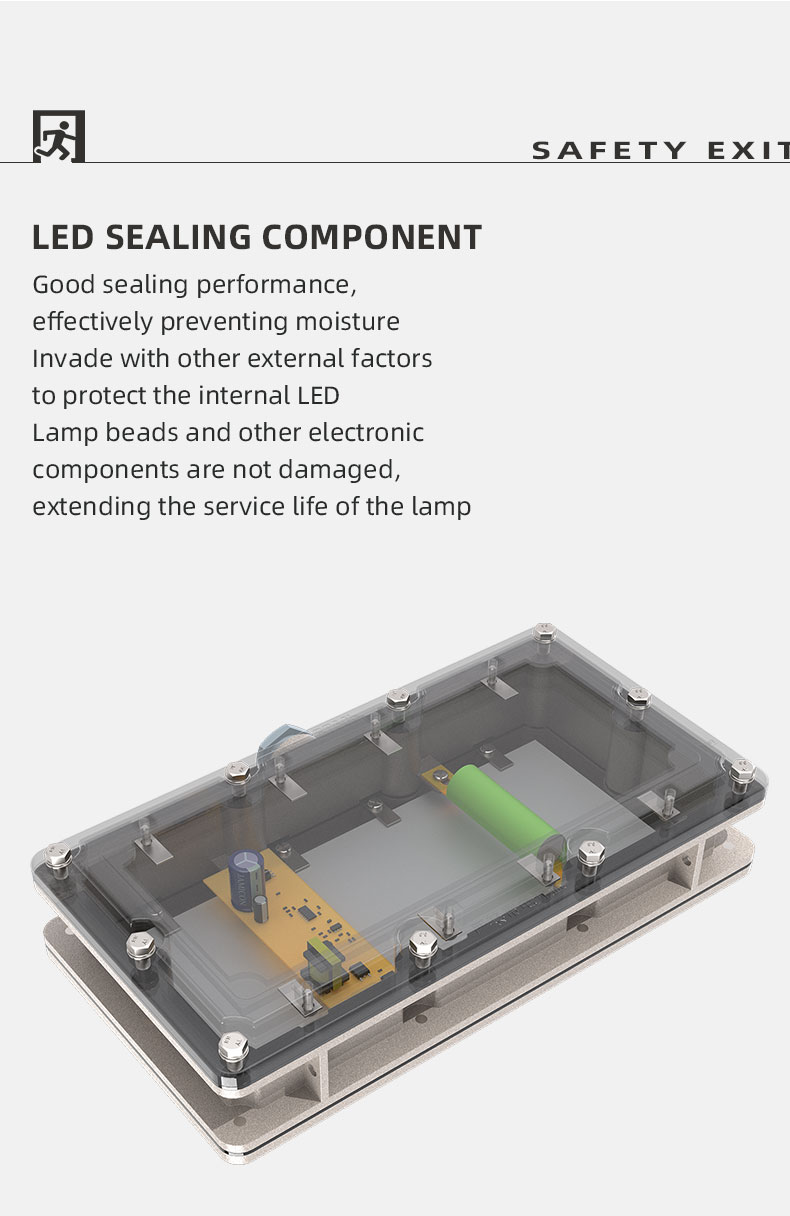
6. مكون ختم LED: أداء إغلاق جيد، يمنع بشكل فعال غزو الرطوبة مع العوامل الخارجية الأخرى لحماية خرزات مصباح LED الداخلية والمكونات الإلكترونية الأخرى غير تالفة، مما يطيل عمر خدمة المصباح
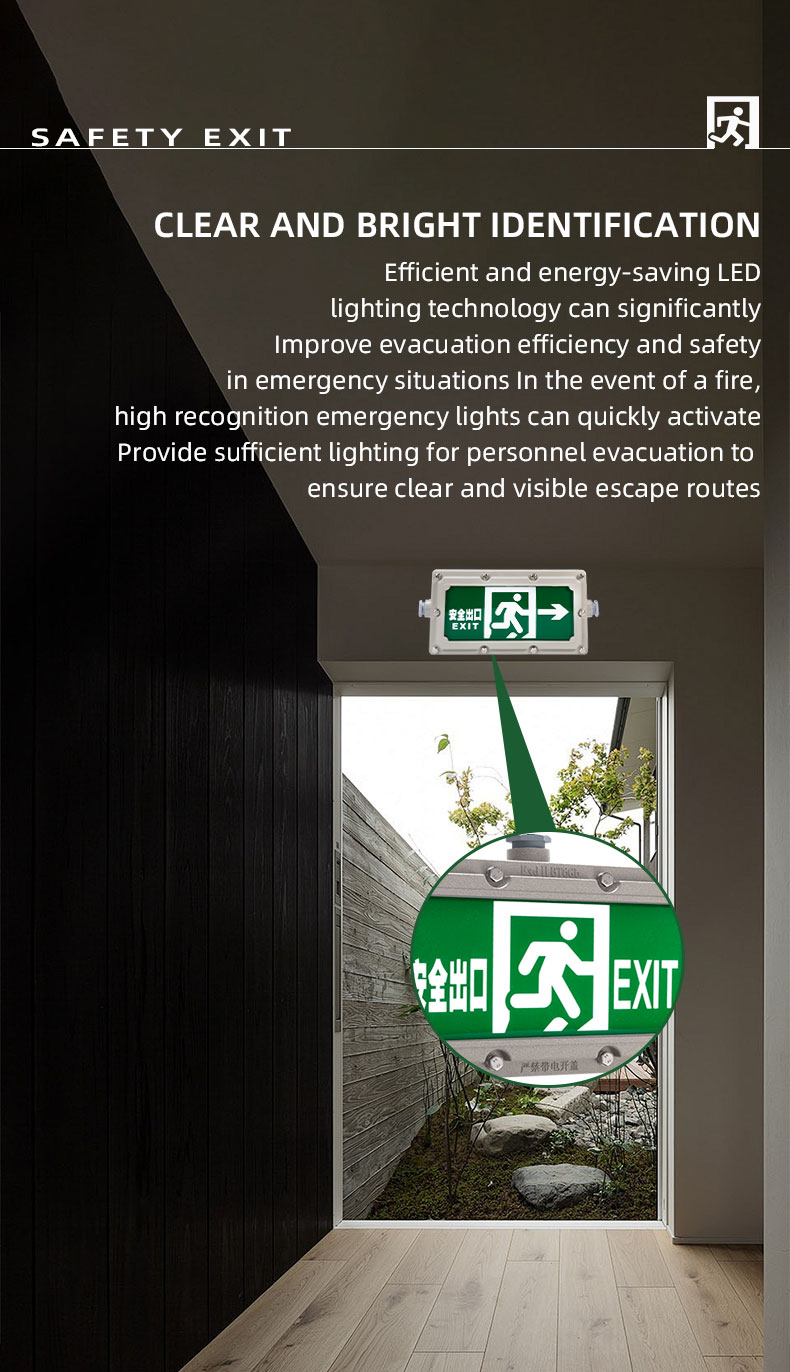
7. تحديد واضح ومشرق يمكن لتكنولوجيا الإضاءة LED الفعالة والموفرة للطاقة أن تحسن بشكل كبير كفاءة الإخلاء والسلامة في حالات الطوارئ في حالة نشوب حريق، يمكن تفعيل أضواء الطوارئ عالية التعرف بسرعة توفير إضاءة كافية لإخلاء الموظفين لضمان طرق هروب واضحة ومرئية
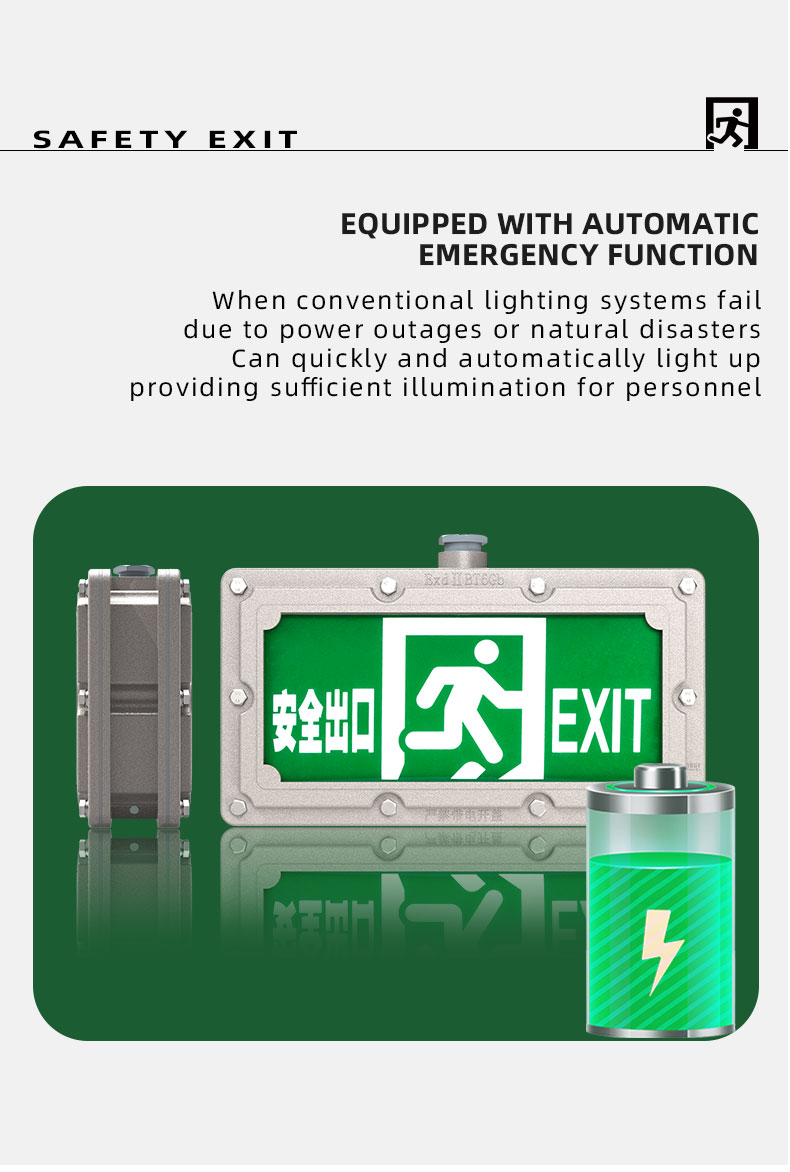
8. مجهزة بوظيفة الطوارئ التلقائية: عندما تفشل أنظمة الإضاءة التقليدية بسبب انقطاع التيار الكهربائي أو الكوارث الطبيعية، يمكن أن تضيء بسرعة وبشكل تلقائي مما يوفر إضاءة كافية للموظفين
مقاس و طلب
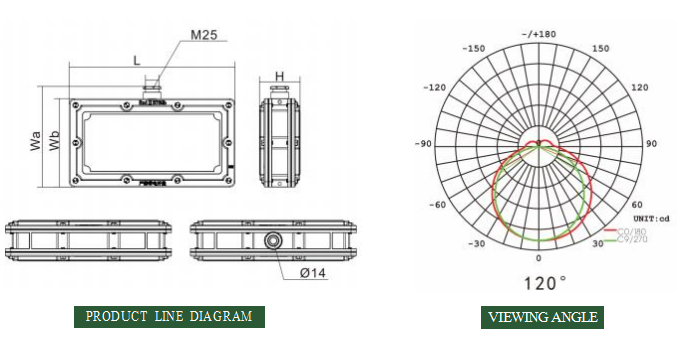
| نموذج | ROFZ66 |
| حجم المنتج (مم) | 355*65*165 |
| Packing size(mm) | 820*370*275 |
| Net weight(kg) | 16 |
| Gross weight | 17 |
| الجبهة الوطنية | >0.95 |
| IP Rating | IP66 |
| CRI | > 80 |
| Anti corrosion grade | WF1-WF2 |
| Ex mark | Ex demb lC T5/T6 Gb/Ex tD A21 IP66 T95℃/T80℃ |
| Multiple styles | Single/Dual/Double Head/Hanging Chain |
| Recharge Period | 24 hours |
| Testing Facility | اختبار التبديل للاختبار المستقل |
| Charging Monitor | Green LED |
| Safety Feature: | قطع الجهد المنخفض لمنع الإفراط في التفريغ |
منتج خط DIAGRAM و VIEWING ANGLE
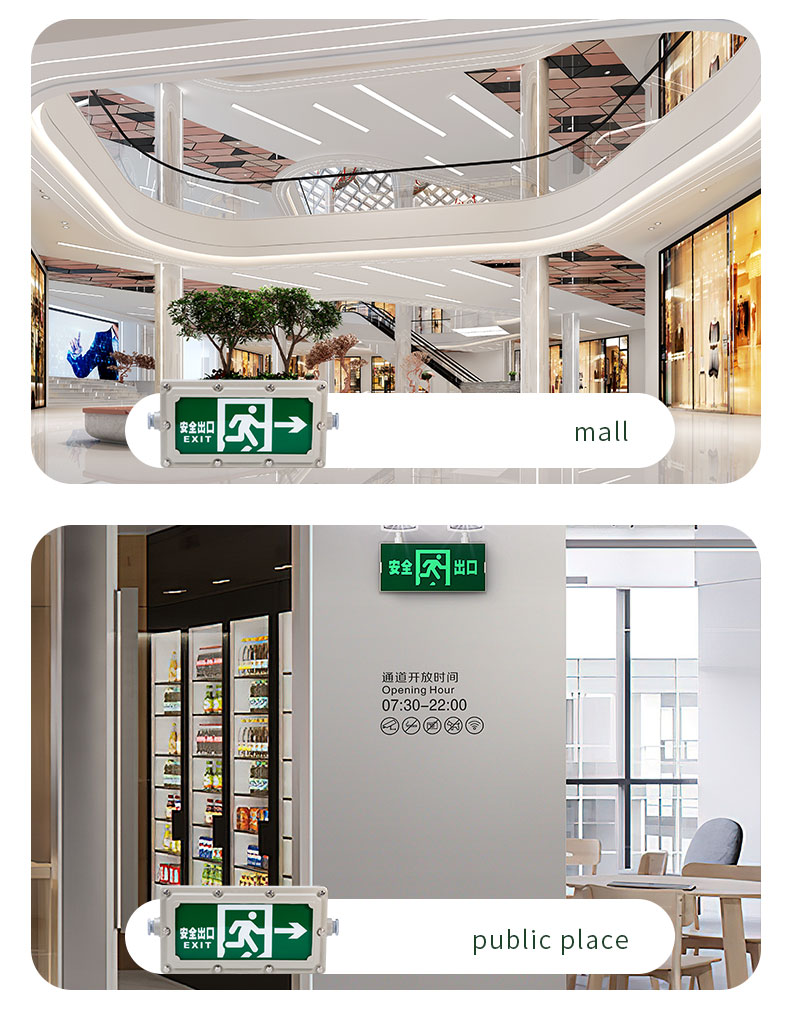
In industrial and commercial environments, emergency egress lighting is a regulatory and safety imperative. Traditional exit signs have evolved from incandescent or fluorescent illumination to solid-state LED systems that deliver greater reliability, lower energy consumption, and extended service life. However, settings such as petrochemical plants, grain handling facilities, offshore platforms, and battery energy storage sites introduce hazardous atmospheres where flammable gases, vapors, or dust may be present. In these contexts, a Public Safety LED explosion-proof exit sign light is not a luxury but a mandated protective device.
Global safety standards, including NFPA (National Fire Protection Association), IECEx, ATEX, and UL industrial classifications for hazardous locations, drive demand. Regulatory enforcement and rising industrial output in regions such as North America, Europe, and Southeast Asia intensify market need. Facilities with Class I, II, or III divisions require luminaires that can withstand internal ignition without releasing energy capable of igniting ambient combustible mixtures.
The core technical requirement for explosion-proof lighting centers on containment and energy restriction. A certified explosion-proof exit sign light is engineered so that any spark or combustion originating within the enclosure cannot propagate outwards. This is achieved through rugged mechanical design that ensures joints, seams, and materials can withstand an internal explosion and quench hot gases before they escape into the hazardous zone.
Another key aspect is intrinsic safety (IS) or non-incendive circuitry, limiting electrical energy to levels below those required to ignite a specified explosive atmosphere. Within this framework, LED technology offers advantages: low forward voltage, minimal heat generation at high luminous efficacy, and predictable failure modes. Thermal management and driver electronics design are critical to maintaining performance under continuous operation, especially in safety-critical emergency evacuation scenarios.
A typical explosion-proof LED exit sign consists of several engineered layers:
Housing: Manufactured from cast aluminum or stainless steel, the housing delivers structural strength and corrosion resistance. Wall thickness and enclosure geometry adhere to explosion-proof certification criteria, providing mechanical protection and thermal mass.
Optical Assembly: High-efficacy LEDs coupled with precision optics ensure visibility at required distances. Sign faces are typically polycarbonate or tempered glass with UV-stable coatings to prevent yellowing or cracking over time.
Driver Electronics: A constant-current LED driver with surge protection and thermal shutdown circuits ensures stable output. In emergency configurations, the driver interfaces with centralized power and battery backup systems.
Gaskets and Seals: Silicone or fluorocarbon elastomers form integrated sealing systems to maintain enclosure integrity against dust and moisture ingress (IP66/IP67 ratings in many products).
Mounting Accessories: Modular brackets, conduit hubs, and universal mounting plates facilitate installation on walls, ceilings, or standoffs.
Performance expectations center on lumen output, visibility range, power draw, battery endurance (for emergency mode), and resistance to extreme temperatures. A typical public safety LED explosion-proof exit sign will maintain legibility at mandated distances (e.g., 75 feet or greater), with an emergency backup runtime of 90 minutes or more.
Several interdependent factors influence reliability and performance:
Thermal Management: Heat adversely affects LED life and driver reliability. Optimal heat sinking and ventilation pathways within the explosion-proof housing are essential.
Certification Integrity: Products must be certified by recognized laboratories for specific hazardous area classifications (e.g., Class I Division 1/2). Compliance involves rigorous testing of mechanical strength, spark containment, and electromagnetic compatibility.
Material Selection: The choice of aluminum alloy, sealing elastomer, and optical materials impacts longevity, corrosion resistance, and performance retention in harsh environments.
Power System Integration: Compatibility with building power infrastructure and emergency battery systems affects switchover times and reliability during grid failures.
Manufacturing Process Control: Tight process control for casting, machining, coating, and assembly ensures that tolerances are maintained and that sealing surfaces deliver consistent performance.
Selecting suppliers for explosion-proof LED exit sign lights requires evaluating not only product specifications but also organizational capability. Key criteria include:
Certified Manufacturing Facilities: Facilities audited for ISO 9001 quality systems and capable of producing components to hazardous location standards.
Traceability and Documentation: Suppliers should provide complete certification documentation, material test reports, and traceable component origins.
Engineering Support: Technical support for system integration, customization, and troubleshooting minimizes downtime and enhances safety compliance.
Distribution and Service Network: Proximity of service centers and spare parts availability reduce maintenance latency, especially in critical infrastructure sectors.
Supplier selection impacts total cost of ownership, uptime, and regulatory compliance, making due diligence essential for procurement engineers and safety managers.
Despite technological progress, several pain points persist:
Certification Complexity: Aligning products with multiple international standards (UL, ATEX, IECEx) increases design and testing cycles.
Environmental Extremes: Facilities in arctic, desert, or marine conditions impose additional material and sealing challenges.
Battery Reliability: Emergency power systems degrade over time; monitoring and replacement protocols are often inadequate in field operations.
Installation Errors: Improper conduit fittings or sealant application can compromise explosion-proof integrity, creating safety hazards.
Addressing these challenges requires comprehensive lifecycle planning, periodic inspection, and collaboration between engineering and operations teams.
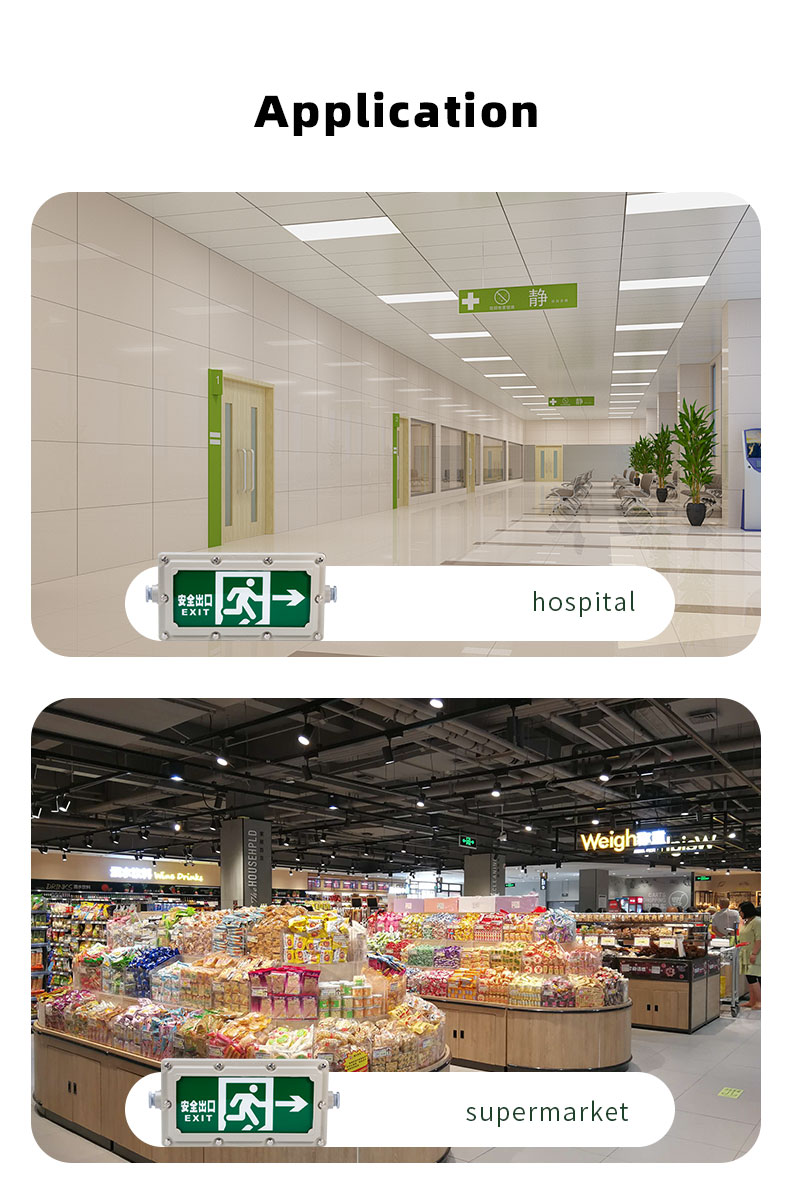
Public safety LED explosion-proof exit signs serve in a range of environments:
Petrochemical Refineries: Located in plant perimeters and control rooms within classified zones where flammable gases may accumulate.
Mining and Tunneling: Underground passages with combustible dust demand rugged, low-maintenance lighting.
Grain Handling Facilities: Grain dust poses significant explosion risk; explosion-proof egress signs support safe evacuation during incidents.
Battery Storage and Electric Vehicle Charging Hubs: Electrolyte fumes and electrical arcing concerns necessitate inherently safe lighting solutions.
In each use case, these exit sign lights operate as part of a safety ecosystem that includes fire detection, alarm systems, emergency communication, and evacuation planning.
Several trends shape the future of explosion-proof egress lighting:
Smart Diagnostics and IoT Integration: Networked systems capable of remote health monitoring, state-of-charge reporting, and predictive maintenance improve reliability.
Higher Efficiency LEDs: Advances in semiconductor materials and optics continue to raise luminous efficacy while reducing power consumption.
Modular, Retrofit-Ready Designs: Solutions that integrate with existing infrastructure reduce installation cost and downtime.
Sustainable Materials and Manufacturing: Greater emphasis on recyclability and reduced environmental footprint aligns safety lighting with corporate sustainability goals.
manufacturers and end users increasingly view explosion-proof exit sign lights not just as compliance items but as proactive safety investments that mitigate risk and support operational continuity.
Q: What distinguishes an explosion-proof exit sign from a standard exit sign?
A: Explosion-proof versions are engineered to prevent internal ignition sources from igniting external hazardous atmospheres, using reinforced enclosures and certified circuitry.
Q: How long must the emergency mode operate?
A: Most industrial codes require a minimum 90-minute emergency illumination, though specific regulatory standards dictate exact requirements.
Q: Can LED explosion-proof exit signs be networked?
A: Yes, modern systems support remote diagnostics and integration with building management systems for status monitoring.


حقوق الطبع والنشر © 2025 شركة Jiangsu Rongya Electronic Technology Co., Ltd جميع الحقوق محفوظة
حقوق الطبع والنشر © 2025 شركة Jiangsu Rongya Electronic Technology Co., Ltd جميع الحقوق محفوظة
يستخدم هذا الموقع ملفات تعريف الارتباط لضمان حصولك على أفضل تجربة على موقعنا.



 واتس اب
 هاتف